
Trace the Pepin County Deed Chain
Start at the newest likely transfer and step backward. One conveyance at a time keeps the chain honest. From each deed, capture the date, grantor, grantee, and instrument reference before moving on. The county's public pages do not display a parcel's full chain, so the dates and parties come from each actual record.
| Transfer date | Grantor to grantee | Deed type | Book/page or document |
|---|---|---|---|
| Newest recorded date | Current grantee to prior grantor | Read from instrument | Record the index reference |
| Earlier transfer date | Prior owner to that owner | Read from instrument | Record the next reference |
| Older chain entry | Earlier grantor to grantee | Read from instrument | Confirm the same legal description |
Guesswork has no place in a chain of title. Take the newest grantee and search that name as the next grantee going back. Each hit becomes the prior link. When a transfer moves into a trust, an estate, or an entity, note the change and follow the document reference rather than assuming the chain has ended.
Pepin County Owner History Sources
Pepin County's owner-history sources each cover a different era. The recorder publishes no single verified start date for the deed index. Tapestry EON and Laredo are the online recorder routes. Older index books and documents may require an office request. The library and Heritage Center preserve maps and family-history clues. They are not a substitute deed chain.
| Source | Known period | Where held | What it contributes |
|---|---|---|---|
| Recorded deed index | Online cutoff not located | Register of Deeds; Tapestry/Laredo | Recorded parties and instrument references |
| 1877 county plat | 1877 | Pepin Public Library | Landowner names and local context |
| Village street map | 1886 | Pepin Public Library | Historic streets and village layout |
| Town records | From 1857 | Pepin Public Library | Road orders, voting lists, and personal-property lists |
| Family files and plat books | Various dates | Pepin County Heritage Center | Research leads and local land context |
The deed-book runs, microfilm range, online cutoff, and any reindex gap are not published. Ask the Register of Deeds about older coverage. Recorder search mechanics and copy requests sit on the separate Pepin County deed records page. For a pay-per-search index, open Fidlar Tapestry EON.

Tapestry EON charges per search. Laredo suits daily users with a monthly subscription.
Move Back Through Pepin County Deeds
Begin with the newest likely deed. From each record, read the grantor and grantee, compare the legal description, and carry the prior owner into the next search. The land description is the anchor. A chain holds together when the same tract appears in every instrument, even after an address or parcel number changes. Vary name forms and dates to cut same-name noise.
- Find the latest deed in which the known owner is grantee and record its document reference.
- Read the grantor and legal description in that instrument.
- Search the grantor as a grantee to locate the earlier acquisition of the same tract.
- Repeat until the online index no longer reaches back, then ask for the older book or index run.
- Grantor
- The party shown as conveying an interest.
- Grantee
- The party shown as receiving an interest.
- Chain of title
- The ordered set of recorded transfers tied to the same land.
- Legal description
- Words that identify the tract, such as section, lot, block, or CSM references.
Historic Pepin County Ownership Clues
The 1877 plat lists landowners for every township. It adds township facts, distances, and a business directory from the period. The 1886 Pepin village map is stranger. It shows platted streets that never opened, a park at a former site, and no railroad mark despite the railroad being built that year. A historical name can settle spelling or locality questions. A map is still not a conveyance instrument.
Library records reach back to 1857. Town of Pepin voting lists, road orders, and personal-property lists survive there. The library also describes a regional index of birth, death, marriage, and divorce notices from about 1900 to 1950. Pepin Herald issues run from 1908 to 1964, with gaps, and later newspapers follow. These sources can tie a family to a road or place name. Each transfer still needs the recorded deed.
Explore the Pepin Public Library local-history resources.
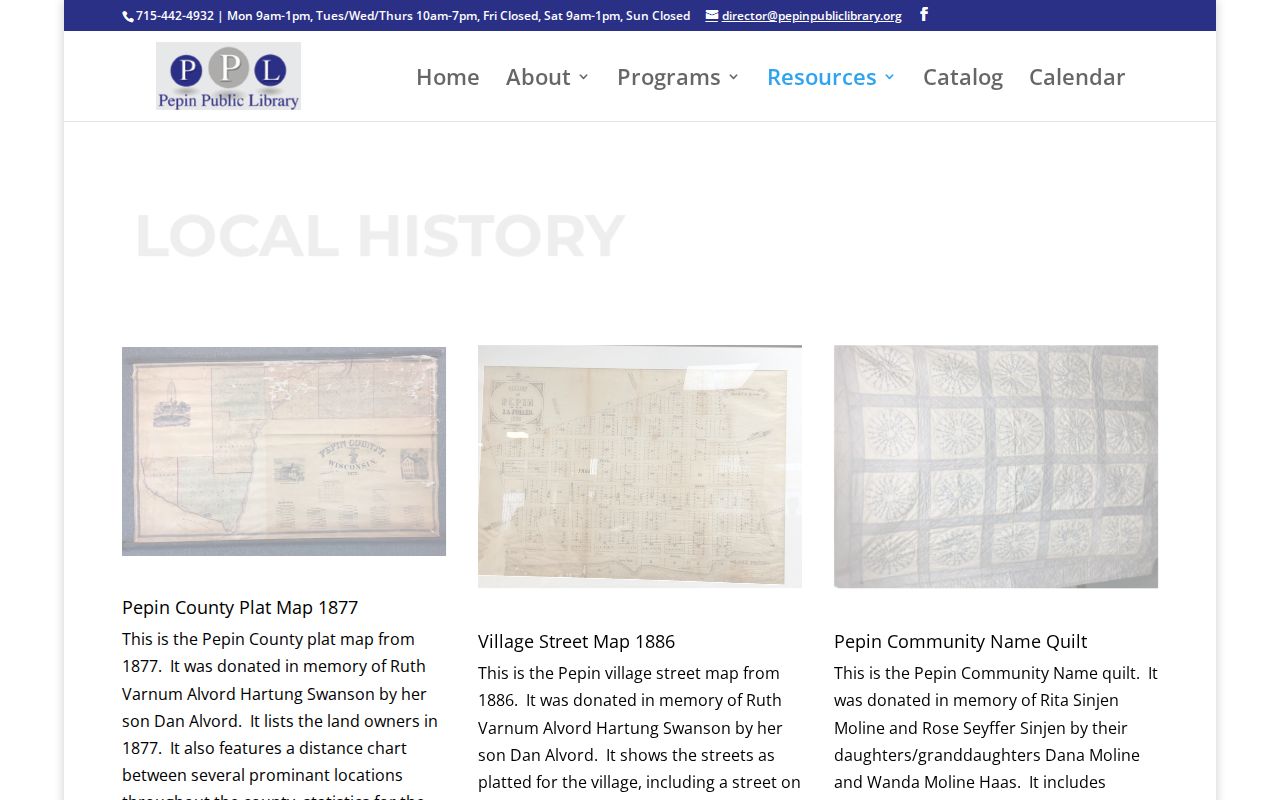
Take a name, road, or plat lead from the maps. Then search the recorder's grantor-grantee index.
Pepin County Plat Books and Family Files
The Pepin County Heritage Center keeps a deep archive. Its holdings include plat-book inventories, family histories, cemetery material, museum files, and digitized collections. A research room and a volunteer request service help when a family or land name is missing from a current online index. The family-history index lists Bauer, Dorwin, Erickson, Brunner, Black, Dahlberg, and other county-linked names. Treat these files as leads into a time and place. They are not proof of a deed transfer.
Match a plat-book clue against the deed's land description. A farm name may outlive an old street name. The chain still needs the same parcel or legal description in every transfer. Cemetery files can anchor a house-history project. The Register of Deeds remains the custodian for recorded deeds, plats, and CSMs.
Visit the Pepin County Heritage Center research page. It covers the plat-book inventory and request information.
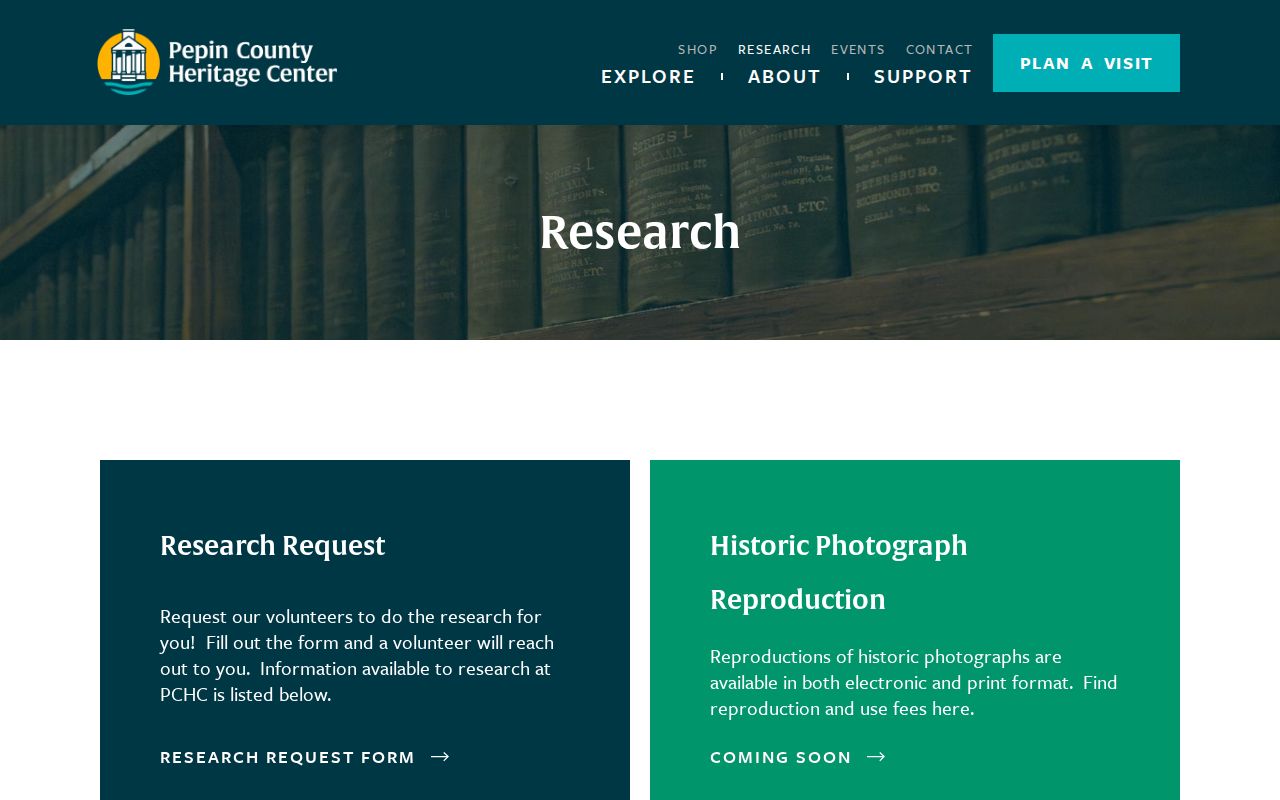
When a name appears in both an archive and a deed, keep the deed reference and the legal description. That pair ties the name to the parcel.
Pepin County Estate Transfers in the Chain
Death changes the pattern. Instead of a plain sale, Pepin County land can pass through a transfer-on-death deed, an executor or administrator deed, an affidavit, a will-related order, a judgment of heirship, a survivorship instrument, or a probate filing. Each route leaves its own trail. The Register of Deeds posts a Wisconsin transfer-on-death deed form, and WCCA can surface an estate case summary. The Clerk of Circuit Court holds the probate file behind it.
Vital records serve a different job. A certificate may confirm identity or timing. It never conveys land. The transfer itself sits in the recorded instrument or the court record that affects the estate. Watch for name changes. When a party becomes an estate or a fiduciary, search that new form and compare the legal description. Certified vital copies carry separate eligibility limits and should not be confused with deed access. Wisconsin's genealogy guidance describes in-person research and notes the state offers no online vital-record index. See the Wisconsin genealogy research guidance for access notes.
Keep an archive clue separate from the recorded property instrument. Do this when you build an ownership chain. Ask the court clerk for a case by number. Then ask the Register of Deeds for the filed deed or affidavit itself. Probate files and the oldest deed books may exist only in office-held form. Plan on a records request for anything beyond online coverage.
Pepin County Deed Scanning Continues
Pepin County's 2025–2027 Land Information Plan keeps deed scanning on the agenda. The Register of Deeds records head the list. New tax-pin assignments, orthography fixes, and mapping improvements follow. The plan names no imaging cutover date. A missing scan therefore does not mean the record is missing. When the index lists a reference but no image, ask whether the document has been processed. Then request the paper or office-held version.
A 2023 state grant report adds a wrinkle. The vendor behind the old GCS deed-copy program was discontinuing it. The county now points occasional searchers to Tapestry EON and subscribers to Laredo. That shift explains why an old link or set of instructions no longer matches county directions. Check copy charges on the Register of Deeds page. Save the source and date of every online result. A later scan or map update can quietly change the trail.
How Far Pepin County Owner History Reaches
Pepin County public sources name no earliest deed-book year. They list no online index cutoff. They hold no full microfilm run. No courthouse loss appears in them either. So an online chain can stop for mundane reasons. Coverage, imaging, spelling, or a renamed party will do it. Ask the Register of Deeds for the earliest grantor and grantee indexes. Also ask for the book or film reference covering your date.
Work backward by legal description, not address. The 1877 plat and the 1886 village map can translate an older location. The library's town road orders and the Heritage Center's plat books add context. None of them replaces a missing deed. The chain may reach an estate. Then use WCCA and the circuit clerk's file to find the transfer evidence.
Lawful use. Former-owner research supports house history, purchase diligence, and estate work. Never use an old owner name or property record to track, stalk, harass, or harm a living person.