
Deed Types in Pepin County Records
The Register of Deeds in Pepin County records conveyance instruments along with related filings. A deed puts a transfer into the public record. A mortgage or lien, by contrast, records an encumbrance against the land. Knowing the instrument type explains why a name shows up in property records, but it cannot settle every legal question the filing raises. Read the document and its legal description closely. For a full title opinion, lean on a title professional.
| Deed Type | What It Does | Common Use |
|---|---|---|
| Warranty deed | Conveys the interest described with the deed’s stated warranties | Common recorded sale transfer |
| Quitclaim deed | Transfers whatever interest the signer holds, if any | Family or ownership cleanup |
| Land contract | Records a contract-based land transfer arrangement | Installment transfer terms |
| Trustee or executor deed | Shows a transfer signed in a fiduciary role | Estate or trust administration |
| Tax deed | Records a deed tied to the tax-deed process | After county tax procedures |
A deed reports a conveyance, while a mortgage, easement, lien, or restrictive covenant affects land without any sale taking place. Pepin County property records also hold plats and certified survey maps, which can clarify a lot or a division. Search by document class and party name only as far as the external index allows.
Pepin County’s Tapestry and Laredo Indexes
Pepin County offers two ways into its deed index through the Register of Deeds. Fidlar Tapestry EON serves occasional users who pay by search. Laredo suits daily users carrying a monthly subscription. The county publishes no earliest online index year. It lists no full dropdown list and no complete set of required search fields. Tapestry’s form is an external application. Check its field labels there rather than guessing from another county’s setup.
Run both grantor and grantee names when you follow a transfer. A grantor conveys an interest. A grantee receives it. Add date limits whenever a name returns too many hits. Try initials and alternate spellings, then compare parcel references and legal descriptions across results. Write down the instrument number or book and page. Staff can then locate the filed copy if an image will not open.
| Index field | Input mode | Research status | Practical use |
|---|---|---|---|
| Grantor or grantee | External text field | Exact labels and required status not verified | Search both sides of a transfer and try name variants |
| Document type | External dropdown | Full choice list not captured | Deeds, mortgages, liens, plats, and CSMs are confirmed classes |
| Recording dates | Date range controls not verified | Online start year unknown | Narrow a large name set if available |
| Parcel or document number | External text field | Exact formats not published | Use the number from a tax or index result |
Open Fidlar Tapestry EON for the county's pay-per-search recorded-document index.

An empty result may simply mark the online cutoff. Ask the Register of Deeds which historical index or book covers your date.
Follow a Pepin County Deed Chain
The grantor-grantee index ties parties to their recorded documents. Start with the probable current owner as grantee. Open that acquisition deed, and note the prior owner listed as grantor. Then hunt for that grantor’s own earlier deed as grantee, and repeat the pattern backward. This chain search method reveals a lot. It still does not guarantee every interest or gap has been resolved.
- Locate the newest likely conveyance and note its parties, date, and recording reference.
- Search the grantee as a grantor to identify a later transfer, then reverse direction to find that person’s acquisition.
- Compare the legal description and parcel key in each instrument so a same-name result is not mistaken for the same land.
- Record every reference and ask the office about older books when the public online index ends.
- Grantor
- The party shown as conveying an interest in an instrument.
- Grantee
- The party shown as receiving the conveyed interest.
- Chain of title
- The sequence of recorded transfers tied to the same land.
- Book and page
- A volume and page reference; some index results may use a document number instead.
Pepin County Deed Copies and Office Requests
Deeds that never made it online still have a path. That path is an office request through the Register of Deeds. Fees come from the county schedule. An uncertified copy runs $2 for the first page and $1 for each added page. Certification adds $1. Recording documents can be paid by cash, check, or money order. Copies and vital records accept card payments in person alongside cash, check, or money order.
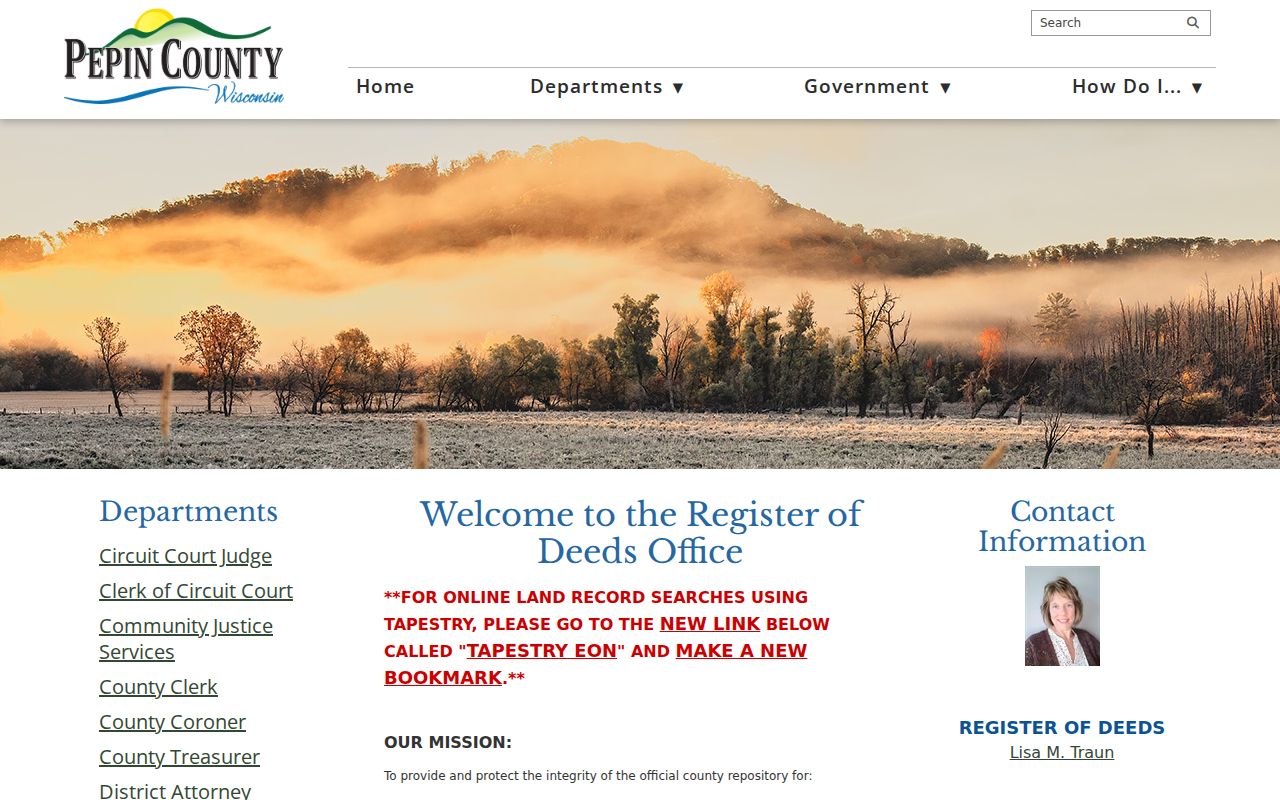
Visit the office at 740 7th Ave W, Room 111, PO Box 39, Durand, WI 54736-0039. Hours run weekdays from 8:30 a.m. to noon and 12:30 to 4:30 p.m. Recording stops at 3:30 p.m. Give staff the parties, an approximate date, and the parcel ID. Include the legal description and any online reference you have. Note: the Register of Deeds will not perform a real-estate search, draft documents, or explain legal meaning.
Confirm current copy requirements on the Pepin County Register of Deeds page.
When you need a complete title chain, hire a title company or attorney. A clerk’s copy is not a title search.
Pepin County Plats Beside the Deed
Recorded subdivision plats and certified survey maps can show how a tract was divided. They can also show how a lot description fits the parcel. The Register of Deeds links a Certified Survey Map Index and an Index of Recorded Subdivision Plats. Neither index publishes exact coverage dates. Use the legal description in the deed to pick a likely plat, and ask the office whenever an entry is unclear.
A plat or CSM supports a land description. It is not a substitute for a tax map. A historic plat book may display owners or rural holdings. It cannot prove that a particular line is the current legal boundary. For a fence or acreage dispute, get the recorded survey document and call a licensed surveyor. For general map context, the Pepin County parcel maps page explains the GIS reference layer.
Keep the deed’s lot, block, section, township, range, or CSM reference intact as you move between indexes. That wording may be the best clue to the land. That holds true even after the modern street address has changed.
Pepin County Deed Fraud Monitoring
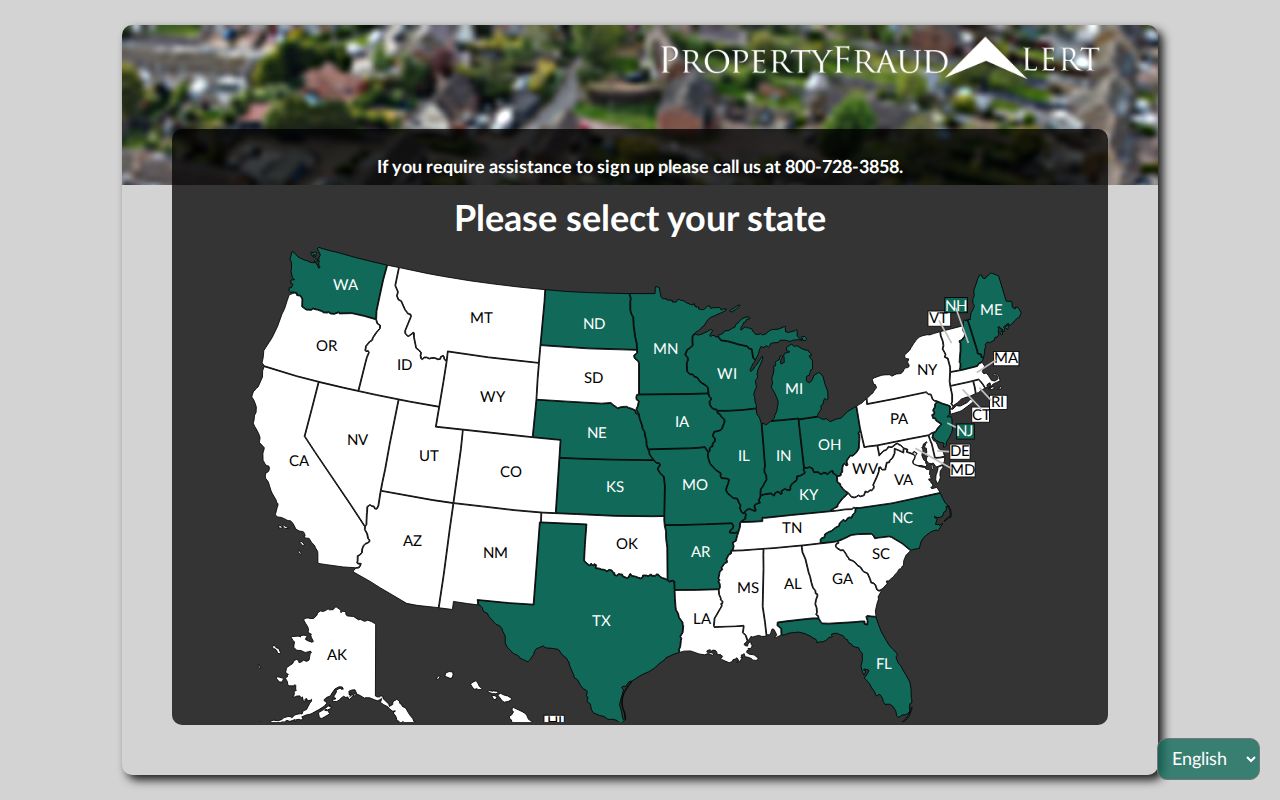
Pepin County landowners have a free early-warning option. The Register of Deeds points to Property Fraud Alert, a service that sends an email, text, or phone notice whenever recording activity matches a name. This is a monitoring tool only. It is not title insurance. No document gets blocked by an alert. A notice simply gives an owner the chance to pull the actual filing, compare the parcel description, and contact the county about anything unfamiliar.
The county also links a Notary Fraud Alert. Be skeptical of any strange letter or call. Verify it through the Register of Deeds page rather than a number supplied in the message itself. False alarms happen when several people or entities share similar names, so the county advises confirming any instrument with the records custodian. Review the Property Fraud Alert program Pepin County references before you set up monitoring.
Tracing prior owners takes a different path. The separate former-owner chain workflow steps backward through each Pepin County deed in sequence.
Older Pepin County Deed Research
Older deed research in Pepin County starts simply. Ask the Register of Deeds first. Staff can point you to the earliest grantor and grantee indexes, the deed book and page you need, or plat and CSM references. The county publishes no earliest deed-book year, no online index cutoff, and no record of a courthouse loss. Work from the legal description. A rural tract may have changed street labels or parcel numbers over time, so a modern address alone can miss the mark.
Pepin Public Library holds a permanent 1877 county plat. It names landowners and adds a period business directory. An 1886 village map from the same collection shows streets that were laid out but never opened, a former park site, and no mark for the railroad built that year. Such maps help identify a historical place name. They are context, though, not recorded title documents. The Pepin County Heritage Center rounds things out with plat books, family histories, cemetery files, and volunteer research requests. Consult the Pepin County Heritage Center research resources for plat books and local-history material.

Old names can come from maps or family files. Once you have one, verify the transfer in the Pepin County deed chain and record each instrument reference.
Get a Recorded Pepin County Deed
When a deed image sits in Tapestry or Laredo, pull the index reference first and check the copy controls. That reference identifies the instrument. Absent an image, ask the Register of Deeds. It fills requests by mail or at the counter after processing. A precise request names the parties and adds the parcel or legal description, the date, and the document reference. Certified copies follow the county's published per-page schedule.
A deed is not a property tax entry. The tax roll can show an owner of record or a value, but the recorded instrument is the actual conveyance document. The Register of Deeds supplies copies. No title examination or legal advice is included. Read each instrument for its stated parties, type, date, and legal description, then call a qualified professional if the legal effect seems uncertain.
Recorded, not guaranteed. The Pepin County deed index shows recorded filings, not every possible interest in land. A title search by a qualified professional is needed to evaluate the chain and determine what may affect ownership.